
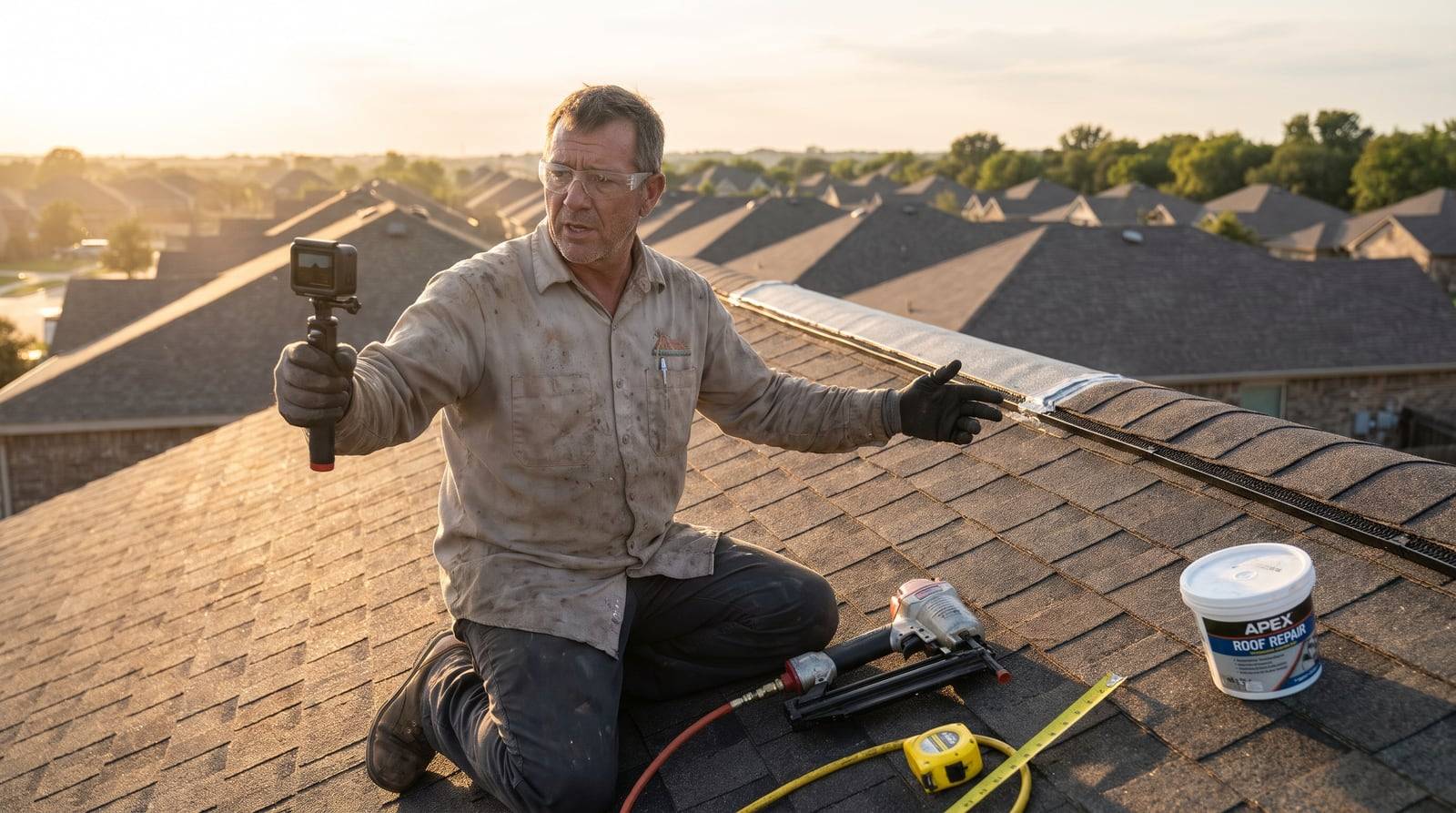
Turn your YouTube videos into local leads by finding the questions your customers actually search for, then building your titles, descriptions, captions, and thumbnails around those keywords. Embed the videos on your website and Google Business Profile, add clear calls to action, and post regularly so every helpful video keeps drawing in nearby buyers.
Most local service businesses treat YouTube like a dusty shelf — a place to park a video and forget it. But YouTube is the world's second-largest search engine, and its videos show up all over Google's results too. With the right YouTube SEO approach, one well-made video can bring in plumbing calls, roofing quotes, or dental bookings from people searching in your town for months, even years.
Here's how service businesses turn everyday videos into a steady stream of local customers.
Why YouTube SEO matters for local businesses
When someone types "how to fix a running toilet" or "best roofer near me," Google often puts video results right at the top. If yours is the video that shows up, you've reached a customer at the exact moment they're deciding what to do, and who to hire.
Two things make video especially powerful for local firms:
- Trust. Seeing a real person explain a problem, show a finished job, or walk through a process builds confidence that text never can.
- Dual visibility. One video can rank inside YouTube and inside Google's main search results, giving you two chances at the same searcher.
Paid ads vanish the moment you stop spending. A video built on solid YouTube SEO keeps working. It's an asset, not an expense.
Start with the searches your customers actually make
Good video marketing starts with keyword research, not the camera. You want videos that answer the questions people in your area are already typing.
Three kinds of searches are worth filming for:
| Search type | Example | Why it works |
|---|---|---|
| Problem/how-to | "why is my AC leaking water" | Catches people early, before they've picked a company |
| Comparison | "tankless vs tank water heater" | Reaches researchers close to a decision |
| Local intent | "roof replacement cost Austin" | Pulls in buyers ready to hire nearby |
How to find these topics
- Type a seed phrase into YouTube and jot down the autocomplete suggestions.
- Read the questions customers email or ask on calls — those are gold.
- Check Google's "People also ask" box for related queries.
- Look at competitors' most-viewed videos for proven demand.
Pick topics where you can genuinely help. A 90-second answer to a common question often beats a slick 10-minute production.
Optimize the video so YouTube understands it
YouTube can't watch your video the way a person does. It leans on the signals you provide to figure out what the content covers and who to show it to. Getting those signals right is the heart of YouTube SEO.
Titles
Put your main keyword near the front and keep it readable. Add your location when it fits.
- Weak: "Our Company's Great Work"
- Strong: "How to Unclog a Drain (Plumber in Denver Explains)"
Descriptions
Write at least 150–200 words. The first two lines show before the "more" cutoff, so lead with your keyword and a clear summary. Further down, include:
- A short explanation of what the viewer learns
- Your service area and city name
- A link to your website and a phone number
- Links to related videos
Tags and categories
Tags matter less than they used to, but add a handful of relevant ones anyway: your main topic, variations, and your city. Pick the best-fitting category too.
File name and captions
Name the file descriptively before uploading (drain-cleaning-denver.mp4, not IMG_0423.mp4). Then upload an accurate transcript, or let YouTube auto-caption and fix it up — captions give the algorithm full text to index and make your content accessible.
Create thumbnails and hooks that earn the click
Ranking is only half the job. If nobody clicks, YouTube assumes your video isn't relevant and buries it. Two things control clicks:
- Thumbnails. Use a bright, uncluttered image with a few big words of text. A real face tends to beat a logo. Keep a consistent style so people recognize your brand.
- The first 15 seconds. Open by confirming you'll solve their problem. "If your water heater is making a popping noise, here's exactly what's causing it" keeps viewers watching — and watch time is one of YouTube's strongest ranking factors.
The longer people watch, the more the platform promotes your video. So cut the rambling intro and get to the value fast.
Connect videos to local video traffic
This is where many businesses stop short. Views are nice, but the goal is local video traffic that turns into phone calls and bookings. Build bridges from your videos to your business.
Embed videos on your website
Put relevant videos on your service pages and blog posts. This keeps visitors engaged longer, which helps your site's own SEO, and gives search engines more context. A video on your "Water Heater Repair" page reinforces that you're the local expert.
Optimize your Google Business Profile
You can upload videos straight to your Google Business Profile. They appear when locals search your business or category on Google Maps — a direct line to people with buying intent in your area.
Use cards, end screens, and links
Every video should point somewhere. Add end screens that suggest a related video or send viewers to your site. Say your phone number out loud and show it on screen. Make the next step obvious.
Add location signals
Mention your city and service area out loud and in the description. YouTube isn't a mapping tool, but these cues help it match your content to local searchers and strengthen your brand's overall local footprint.
Build trust at scale with a content plan
One video rarely changes a business. A library of helpful videos does. Consistent video marketing compounds: each upload adds another way in for searchers and another reason to trust you.
A simple framework for service businesses:
- Educational videos answer the questions customers ask before hiring. These attract the most search traffic.
- Project showcases show before-and-after results. These build trust and help close hesitant buyers.
- Meet-the-team and FAQ videos humanize your business and handle common objections.
- Review and testimonial clips turn happy customers into proof.
You don't need to post daily. Two solid videos a month, each aimed at a real search query, will beat a burst of random clips followed by silence.
Keep production realistic
Phone cameras shoot great footage now. Put clear audio first — grab an inexpensive lapel mic — then good lighting and genuine helpfulness over cinematic polish. Viewers forgive rough edges; they don't forgive muddy sound or wasted time.
Measure what's working
YouTube SEO is a loop: publish, measure, improve. Check YouTube Studio analytics each month and watch these numbers:
| Metric | What it tells you | What to do |
|---|---|---|
| Impressions click-through rate | Whether titles and thumbnails earn clicks | Test new thumbnails if below ~4% |
| Average view duration | Whether content holds attention | Tighten intros and cut filler |
| Traffic source: YouTube search | Whether your SEO is landing | Double down on topics that rank |
| Traffic to your website | Whether views become visitors | Strengthen calls to action |
Find the videos driving the most search traffic and make more like them. Retire or re-edit the ones nobody finishes.
Common mistakes to avoid
- Filming before researching. Making videos nobody is searching for wastes your effort.
- Ignoring the description. A blank or one-line description throws away free ranking signal.
- No call to action. Views without next steps don't grow your business.
- Inconsistency. Posting three videos then disappearing tells the algorithm you're not serious.
- Only talking about yourself. Customers search for solutions, not sales pitches. Lead with help.
A simple 30-day starting plan
If this feels like a lot, start small:
- Week 1: List the ten questions customers ask most. Pick the top three.
- Week 2: Film short, clear answers to those three questions.
- Week 3: Upload with keyword-rich titles, full descriptions, captions, and custom thumbnails.
- Week 4: Embed each video on the matching page of your website and upload one to your Google Business Profile.
Repeat the cycle each month. Within a few months you'll have a small library working around the clock to bring in local video traffic.
The bottom line
For local service businesses, YouTube SEO isn't about going viral. It's about being found by the handful of people near you who need exactly what you offer, right when they're looking. Answer real questions, optimize every upload, connect videos back to your site and Google Business Profile, and stay consistent.
Do that, and your video marketing stops being a shelf of forgotten clips and becomes one of the most dependable lead sources your business has.